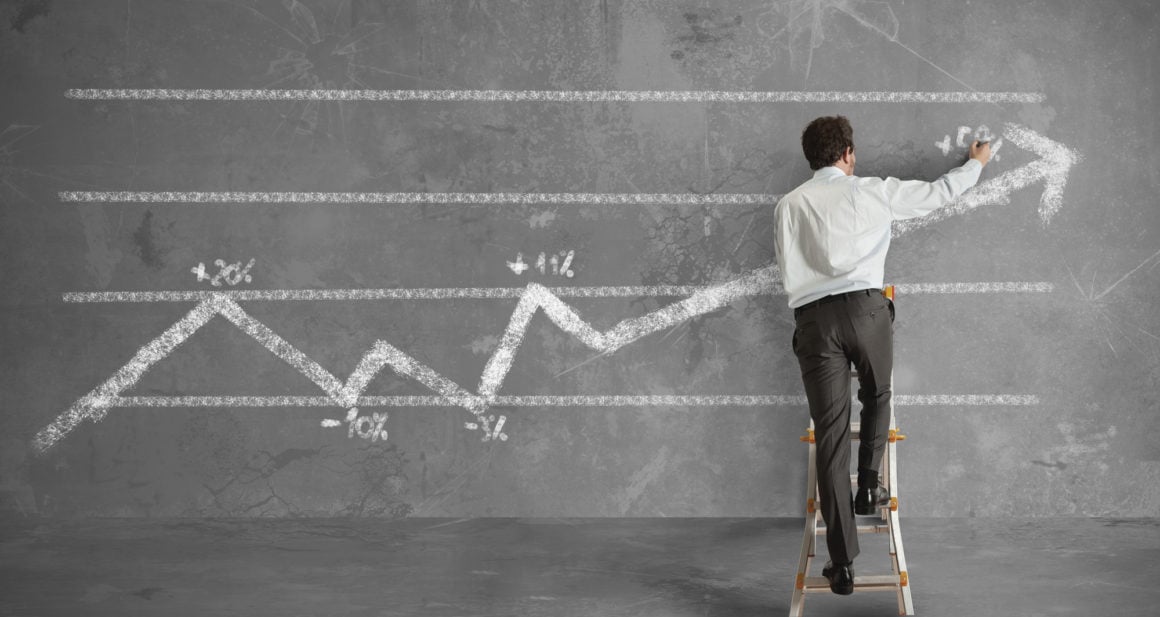
We’re already well into a new year, which means it’s time that little creatures come out of hibernation – they’re called forecasters and their predictions of what lies ahead of us abound.
These relate to all areas particularly property because almost anyone who owns real estate would give their second garage to know what will happen to prices in the future.
But first, it’s important to understand…
The difference between Forecasts and Expectations
I expect there to be a recession in the next decade.
But I don’t know when it will come.
I expect that some investments I make won’t do as well as I would like them to.
But I don’t know which ones they will be.
I expect the property market to boom and then prices will drop again.
But I don’t know when the current upturn phase of the cycle will end.
I expect interest rates will remain high for a while longer and then start falling.
Probably not till the last quarter of the year.
In fact, I don’t know when.
And I expect another world financial crisis.
But I have no idea when it will come.
Now these are not contradictions or a form of cop out.
You see… there’s a big difference between an expectation and a forecast.
An expectation is an acknowledgement of how things worked in the past and will likely work in the future.
A forecast is putting a time frame to that expectation.
Of course, in an ideal world, we would be able to forecast what’s ahead for our property markets with a level of accuracy.
But we can’t because there are just too many moving parts.
Sure, there are all those statistics that are easy to quantify, but what is hard to identify is exactly when and how millions of strangers will act in response to the prevailing economic and political environment.
Then there will be those X factors that crop up each year- those unforeseen events that come out of the blue, which could be local or overseas that undo all the forecasts we made.
So what should you do about this?
I’ve found the most practical approach is to have expectations of what could happen without specific forecasts.
That’s because when you expect something to happen at some stage in the future, you’re not surprised when it happens.
Expecting the worst while preparing for the best forces you to invest with room for error, and psychologically prepares you for the inevitable disappointments.
This is exactly how I took advantage of the property boom of 2020-21 and how I planned for the property downturn that followed it.
I didn’t know when it would come, how long it would last or how it would affect the value of my property portfolio or the cash flow of my business.
But I just knew a downturn would come once again, and I was prepared for it with cash flow buffers to see me through the difficult times.
What I’m trying to explain is that there’s a huge difference between, “I expect another next property downturn sometime in the next decade” and “I expect the next property downturn in the second half of 2026.”
One of the big differences is how I invest.
If I expect this current property upturn we’re experiencing will be followed by another property downturn, then I won’t be surprised when it comes.
But since I don’t know when this will happen, I won’t make the focus of my property investing trying to time the property cycle.
Because trying to time the property cycle is one of the reasons many property investors fail.
On the other hand, strategic investors maximise their profits during booms and minimise their downside during busts by investing in assets that have always outperformed, rather than looking for the next hot spot or for the type of property strategy that works “now” rather than one that has worked in the long term.
They own investment-grade assets in investment-grade inner and middle ring suburbs of Australia’s three big capital cities.
The type of property that keeps growing in value over time without fluctuating wildly in price when the property cycle slows down.

So what’s ahead for property?
Having said that, I’d bet that you’d still like to know what’s ahead for our property markets.
I know some people suggest that if you want to know what lies ahead, start by looking at the clues behind you, but in my mind, the next decade will be different to the last decade.
Let’s start with…
10 things that will stay the same
1. Australia’s population will keep growing strongly
Australia’s population growth has rocketed back to the boom rates of the mid-1950s, increasing by 2.4 per cent in the 12 months to June according to the latest figures released by the Australian Bureau of Statistics.
A record half million-plus net influx of foreign students, workers and permanent settlers came to these shores with net overseas migration adding 518,100 people, an increase of more than 150 per cent on the previous year and the highest nominal inflow ever recorded.
This surge in migration created a significant rise in housing demand, but overseas migration has little direct effect on purchasing activity in the short term – 38% of migrants don’t buy property until they have been in Australia for five years, and 71% of migrants only own after 10 years.
However overseas arrivals have sharply increased rental demand and created a significant growth in rent prices.
Going forward into 2024, even though the government plans to lower the levels of student and temporary visa immigration, high migration levels and strong population growth are set to remain key features of the housing market.
This means that competition in the rental market will continue next year, making it just as hard for renters to secure a new place to live.
Rents will also continue to see very high rates of growth while undersupply remains such a big problem.

2. More congestion on our roads
While it has been shown overseas that cities can be liveable despite having very large populations of many millions, the infrastructure and in particular public transport needs to be able to accommodate the population.
Unfortunately, Australia’s infrastructure growth has not kept pace with our rising population meaning roads will become more clogged and it’s unlikely our governments will find the money necessary to upgrade our infrastructure.
This means accommodation in proximity to public transport will become more sought after and relatively more valuable.
3. Property prices will continue to increase
That’s what’s been happening since Federation, but some areas will increase in value more than others.
And the age-old adage of ‘location, location, location’ will continue to hold true, with property values heavily influenced by location.
Property values in the inner and middle ring suburbs in our large capital cities, where the locals will be relatively wealthier and have more disposable income, will increase proportionally more than in the outer suburbs.
Over the forthcoming decade, the poor will live further out than ever because the rich do not like commuting and will continue to live in our leafy more established suburbs close to amenities and public transport.

4. We’ll have the requirement to build around 240,000 new dwellings each year
But we’re currently falling short of this target.
5. The property cycle will continue
It will continue with periods of growth, stabilisation, and correction, but the long-term trend will be upward driven by owner occupiers, while the cyclical ups and downs will be more driven by investors falling prey to fear and greed.
6. Australians will continue to aspire to home ownership
This will continue to underpin our property markets.
A large percentage of the hundreds of thousands of migrants coming to Australia will also aspire to home ownership, in fact that’s of the many reasons they have come to Australia.
However, over the coming decade, more of us will move to medium and high-density living – apartments and townhouses.
7. Ordinary Australians will continue to invest in property
Ordinary Australians will continue to try and secure their financial future through property investment due to its potential for capital growth and rental income.
Property pessimists will still exist
The property pessimists will still be out there telling us not to invest and our property markets are going to crash.
8. Property spruikers and get rich quick artists
Property spruikers and get rich quick artists will still be there taking money from naïve property investors looking for a shortcut to get rich quick in real estate.

Note: Finally, we will be living in the best country in the world at the best time in history.
Now let’s look at…
10 things that will be different over the next decade
1. We will have a period of higher interest rates.
Until a couple of years ago most home owners and property investors had only experienced low interest rates.
Obviously this came to an end in 2022 when the RBA started to raise interest rates to quell inflation, and while rates will start falling later this year, they won’t get back to the low rates we’ve enjoyed over the last decade.

2. Rents will grow strongly
Over the last decade residential rents did not keep up with inflation, but moving forward rents will continue to grow.
Sure the federal government has announced plans to fix Australia’s “broken migration system” and to “bring migration back to sustainable, normal levels” but there is already a severe dwelling undersupply – we have a deficit of housing which will not be fixed any time soon and this will ensure vacancy rates remain low and rents keep rising in 2024.

The problem is supply is so scarce, and many property investors have retreated from the market which means there are not enough property investors providing accommodation to meet the scale of demand.
Yet over 90% of all rental accommodation is provided by mum and dad property investors who own one or two properties.
While the build to rent sector will in due course provide accommodation, it will not be anywhere near enough to move the needle and will likely only be in the form of high rise towers and unaffordable rents.
3. Lower levels of home ownership
Difficulty saving a deposit and the higher cost of living will mean that there will be lower levels of home ownership for those in the typical first home buyer age group and possibly even falling levels of home ownership rates for those in their 40s and even 50s.
While 30% of Australian households were renting five years ago, I wouldn’t be surprised to find that two out of five households could opt to rent by the end of the coming decade.
4. According to the census household size is increasing and over the next decade we’re likely to see more multi-generational clans living together as continued multiculturalism, rising house prices and an ageing population lead to an increase in the number of households that see children, parents and grandparents or living under the one roof.
Plus, the mix from overseas has changed, with more migrants now coming from those countries with large family units.
However, falling birth rates mean that the proportion of younger age groups in our population will continue to shrink in the coming decade, while the share of older groups will rise rapidly.
5. At the other extreme there will be an increase in those living as a couple or alone as more of us live longer and live alone longer, especially women over 60 years; and sadly, most will have limited financial means.
6. Increased Urbanization and High-Density Living.
As population growth continues, there will be a trend towards urbanization and high-density living, with a focus on apartment living and mixed-use developments.
The cherished dream of owning a quarter acre block with enough space for a game of backyard cricket will be nearly gone with more of us trading backyards for balconies and courtyards.
In line with more of us living in medium density developments, urban areas will undergo significant redevelopment, focusing on creating more liveable, sustainable, and pedestrian-friendly environments.
7. 30-40% of the jobs we know could disappear in the next decade
And there will be a casualisation of the workforce.
Many local jobs will disappear offshore while others will be replaced by artificial intelligence.
Now I’m not suggesting that this will lead to mass unemployment, instead, it will lead to redeployment as a range of new occupations that we haven’t even thought of yet will come to light.
At the same time, more of us will be working a range of casual or part-time jobs and as part of this trend, more oldies will be working than in previous generations. They will be doing so, because they have to financially, rather than because they want something to do.
8. Most Baby Boomers will have retired by the end of the next decade
And Gen X’s will be coming up to retirement age.
Gone will be the oft-promoted image of Australian retirement as a happy couple walking along a beach at dawn or dusk.
It will be replaced by the reality of weathered hands still working as many Baby Boomers will not have enough savings or superannuation to see them through their golden years.
There are about five million people born between 1946 and 1964 and they are jumping into the space previously occupied by pre-boomers (born 1927-1945) who never numbered more than three million.
This means the pension and health care system just won’t be able to cope with the avalanche of Baby Boomers careening into retirement.
As life expectancy increases it will be necessary to push out the “official” retirement age and the age when the pension or health care benefits kick in.
Across the world the average age of retirement generally starts at 65 but already many countries, including Australia, are pushing this to 67 or 68.
At the same time these trends will ensure that Australia keeps importing more migrants of working age to keep paying taxes to support the retired Boomers.
9. Development of a new set of “tribes”
As always, demographics will drive our property markets but increased high-density living, migration, multiculturalism and technological advancements are among the social changes that will lead to the development of a new set of “tribes”. These will include:
- Social singles – it is predicted by 2030 more than 26% of Australians will be living in single person households.
- Multigenerational clans – Continued multiculturalism and changing age demographics within the Australian population are tipped to increase the number of households that see children, parents and grandparents or living under the one roof.
- Homework tribes – It is possible that one in three people be employed on a freelance basis by 2030. This trend emphasises the an increasing need for at home workspaces as well as more spaces for communal work.
- Peter Pans – these are the Baby Boomers, many of whom will now be retired but want to live independently at home longer. They will not be looking for sea change, tree change or retirement villages, but will want to spend their golden years in the familiar locations, enabling them to continue enjoying their lives close to their families and friends.
10. We will be inundated with new technology we haven’t even dreamed of yet
There is likely to be increased use of technology in real estate transactions
I can foresee advancements in technology streamlining property transactions, with AI, blockchain, and virtual reality becoming integral in property viewings, transactions, and management.
At the same time, we’ll likely become a cashless society and even credit cards could disappear in the next 10 years.
Note: If you were a visitor to Australia today and came back in a decade, it’s unlikely that you would recognise our altered landscape.
Our cities would look very different but what wouldn’t change is that Australia would remain the best place in the world to live and we’d with a queue of people clamouring to live here.