soldering contribute to circuit board assembly companies
Soldering stands as a cornerstone process within circuit board assembly, playing a pivotal role in connecting components and establishing electrical pathways essential for the functionality of electronic devices. Its significance extends far beyond mere mechanical attachment; soldering contributes to the reliability, performance, and longevity of circuit board assemblies, making it an indispensable aspect of the manufacturing process for electronics. This article delves into the multifaceted ways in which soldering contributes to circuit board assembly companies and underscores its critical importance in ensuring the integrity of electronic systems.
Fundamentally, soldering serves as the glue that binds components to the circuit board, forming stable electrical connections that withstand the rigors of operation. By melting solder—a metal alloy with a low melting point—onto the junctions between components and conductive traces, soldering creates a permanent bond that facilitates the flow of electrical current between elements. This enables the seamless transmission of signals, power, and data throughout the circuit, laying the foundation for the functionality of electronic devices.
Moreover, soldering plays a crucial role in ensuring the mechanical stability and structural integrity of circuit board assemblies. In addition to providing electrical connectivity, solder joints serve as mechanical anchors that secure components in place and withstand mechanical stresses such as vibrations, thermal expansion, and mechanical shock. Properly soldered joints exhibit robust mechanical properties, resisting fatigue and deformation over time, thus enhancing the reliability and longevity of electronic systems—a critical consideration in applications ranging from consumer electronics to aerospace.
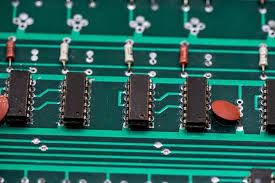
How does soldering contribute to circuit board assembly companies?
Furthermore, soldering enables circuit board assembly companies to achieve miniaturization and optimize space utilization within electronic devices. With the advent of surface mount technology (SMT), soldering has evolved to accommodate smaller, denser components with tighter spacing and finer pitch. Advanced soldering techniques, such as reflow soldering and selective soldering, allow companies to assemble complex circuit boards with high component density and precision, maximizing functionality while minimizing footprint. This capability is instrumental in meeting the demand for smaller, lighter, and more compact electronic devices across various industries.
Additionally, soldering facilitates the implementation of specialized features and functionalities within circuit board assemblies, enhancing their performance and versatility. For instance, soldering techniques such as through-hole plating and solder mask application enable the creation of multi-layered circuit boards with intricate designs and advanced features, such as impedance matching, signal routing, and thermal management. These capabilities empower circuit board assembly companies to tailor solutions to specific application requirements, whether it’s high-speed data transmission, high-frequency RF applications, or ruggedized industrial environments.
Moreover, soldering contributes to the overall quality and reliability of circuit board assemblies by minimizing the risk of defects and ensuring consistent solder joint quality. Advanced soldering equipment, such as automated solder paste dispensers, stencil printers, and reflow ovens, enable precise control over soldering parameters and process conditions, resulting in uniform solder deposition and reliable interconnections. Furthermore, automated inspection systems, such as automated optical inspection (AOI) and X-ray inspection, provide comprehensive quality assurance by detecting soldering defects, such as insufficient solder, bridging, or tombstoning, with high accuracy and efficiency.
In conclusion, soldering is an indispensable process in the realm of circuit board assembly, underpinning the functionality, reliability, and performance of electronic devices. From establishing electrical connections and ensuring mechanical stability to enabling miniaturization and enhancing functionality, soldering contributes to every aspect of the manufacturing process. As circuit board assembly companies continue to innovate and push the boundaries of technology, soldering remains a vital link in the chain, driving progress and propelling the electronics industry forward.