A medicine built around a more precise form of CRISPR gene editing appeared to work as designed in its first clinical trial test, developer Beam Therapeutics said Tuesday. But the death of a trial participant could renew concerns about an older drug used alongside Beam’s genetic medicine.
Beam’s medicine uses a technology known as base editing to activate a gene in stem cells collected from people with sickle cell disease, an inherited blood condition that can cause debilitating pain and a constellation of other symptoms.
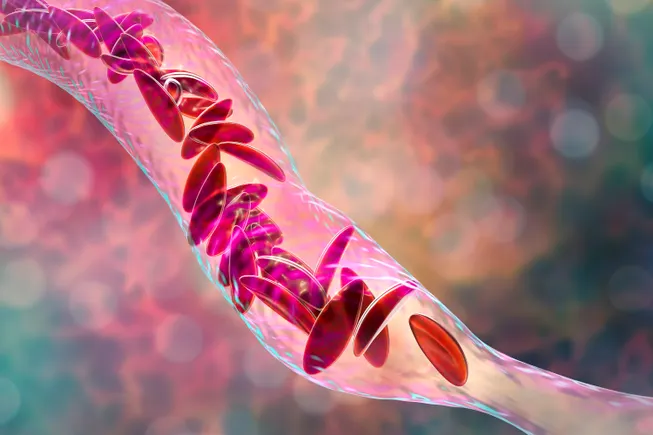
Data shared by Beam from the first handful of patients treated in the trial show the company successfully edited those cells in a laboratory. When later reinfused back into patients’ bodies, they matured into red blood cells that were more durable and less likely to warp into the sharp-edged crescents associated with the disease.
However, one of the patients died from lung damage that was judged by their physician and the trial’s monitoring committee as related to an old chemotherapy drug commonly used prior to stem cell transplants. The Food and Drug Administration also reviewed the case.
Called busulfan, this drug is known to be toxic. But it is effective at creating an opening in the bone marrow for newly edited stem cells to take root, a necessary step for infusing gene editing therapies like Beam’s.
“This is a sad outcome and it really underscores the real risks of doing myeloablative transplant with chemotherapy,” said Beam CEO John Evans in an interview. “These risks are well known. This includes significant toxicities that are possible and the rare, but real, risk of mortality.”
Still, he added, those risks must be weighed against the urgent health threats posed by severe cases of sickle cell, which can cause strokes as well as heart and lung damage. The disease can also shorten a person’s lifespan.
The patient’s death highlights the challenges developers like Beam face in advancing cutting-edge gene editing techniques that still require the blunt tools of decades past. Treatment with Casgevy, a CRISPR therapy that was approved for sickle cell in a U.S. first last year, also involves use of busulfan, as does Lyfgenia, a competing genetic therapy that’s built in a different way from Casgevy.
Adoption of both therapies since they became available has been slow, which may in part be due to patient concerns over the risk of infertility with busulfan.
Beam is working on a solution to sidestep busulfan and, on Tuesday, also released data from testing in monkeys showing how it may work.
Rather than busulfan, Beam used an antibody drug targeting a protein, CD117, that’s expressed on the surface of stem cells. Binding to this protein is meant to suppress and eliminate diseased cells in the bone marrow. The second part of Beam’s solution involves an engineered stem cell product that’s very similar to Beam’s first-generation medicine. In addition to editing the stem cells to fix sickle cell, however, Beam also alters them in such a way its antibody can’t bind to CD117.
In preclinical testing, Beam was able to successfully edit stem cells and get them to engraft in the monkey’s bone marrow using only antibody conditioning.
Beam plans on doing further testing in monkeys before starting a Phase 1 study of its anti-CD117 antibody in healthy volunteers. If all goes well, the company would then evaluate the antibody together with the stem cell product in people with sickle cell and beta thalassemia, another inherited blood condition.
“This is clearly the future,” said Evans. “It would not only make this process much safer for all patients because you’ve gotten rid of chemotherapy, it also expands the addressable population by three- to four-fold.”
Beam estimates that its antibody and second-generation sickle cell medicine, BEAM-104, are several years behind its first-generation candidate, which it calls BEAM-101.
Progress from BEAM-101 will help to speed along development BEAM-104, Evans said. Tuesday’s trial data on BEAM-101 are therefore an important proof point for the company and its base editing technology.
The main outcome Beam tracked involves measuring in the blood a fetal form of the oxygen-carrying protein hemoglobin. Production of this fetal hemoglobin is turned off in the first few months after birth as the body transitions to adult hemoglobin, which, in people with sickle cell, is deformed in such a way that it sickles red blood cells.
With BEAM-101 — and BEAM-104 — the company is essentially trying to recreate a condition known as hereditary persistence of fetal hemoglobin. It does this by using base editing to change a single “letter” in genes that control fetal hemoglobin’s promotion.
Data from the first four patients with a month or more of follow-up show that BEAM-101 led to significant levels of fetal hemoglobin and, correspondingly, lower levels of sickled hemoglobin. In two patients with a bit longer follow-up, treatment led to elimination of nearly all red blood cells expressing only sickled hemoglobin by the second month.
This effect should protect the treated patients from the pain crises typical of sickle cell. So far in testing, none have been reported, Beam said.
There were no side effects classified as severe or serious that investigators judged to be related to BEAM-101. The participant who died had received BEAM-101 treatment several months before developing lung dysfunction.
Participants, who ranged in age from 19 to 27 years, all had a history of sickle cell-related pain crises in the two years prior to screening for enrollment in the study.
As the data are early and from only a few patients, it’s difficult to judge whether BEAM-101 might ultimately be competitive or superior to Casgevy or Lyfgenia. Evans pointed to early signs of easier treatment processing, such as faster time to engraftment, that may eventually differentiate BEAM-101. And he noted how a few patients treated with those two approved therapies still experience the occasional pain crisis.
“Clearly, there’s a little bit of depth of cure to be had,” Evans said.
The company plans to present data from more patients at the American Society of Hematology’s annual meeting in December. The results disclosed Tuesday come from an abstract published online ahead of the conference.
Overall, Beam has enrolled 35 patients in the expansion cohort of its Phase 1/2 study testing BEAM-101. Along with hemoglobin levels, the company will also track the proportion of patients who are free of pain crises for 12 or more months.